

CAN I LEARN SOMETHING FROM ANOTHER MEMBER THAT I WANTED TO SHARE?
It’s a little bit strange, but there’s people that learn reflexology and for reflexology you have your couple of moves. I don’t want to show reflexology here.
What I want to show is an idea on how to do chakra balancing on the feet or the chakras are taken from the concepts in a reiki. I’m going to go through it really quickly in a matter of seconds, but you have one point here.
You can hold for like five minutes or two minutes. I’m going to hold for 20 or 30 seconds. The second point is around here and then the third point is here and the fourth point is about here and the fifth point is around here.
You could arguably do all of the toes, but for the purpose of my illustration I’m going to just do around here. And then we have the third eye, which would be here as well as here. It’s interesting, the third eye is actually a vestigial organ, which means that it doesn’t develop in humans, but it’s very genetically.
It’s just turned off. And then the last one would be up here. And that would be an example of emerging the concept of reiki with reflexology under the chakras are also represented everywhere on the body, including the feet.
I don’t think this is an example. huge huge deal but I thought it was curious and because I have a pair of feet and a camera today I felt like it would be nice and it’s also likely that the third eye might not be these two points for someone else yes the actual balancing I’m not going to show I’m not qualified I’m a Reiki level two I’m not a Reiki master but having seen the the combination of foot reflexology with Reiki.
I wanted to share that today because it seems like a great time so that’s it and then you can go back and just do your normal stuff whatever it might be in this case the thumb lock and the thumb lock a lot like the move that you showed us earlier it’s something you need to practice you can’t just see it understand it and replicate it you need to be able to properly do the thumb lock and in the case of Twina which is what we’re interested in today you also have to practice to get that move We were talking about.
Earlier how therapists who are, have been practicing for three years, five years or 10 years, they can look at new moves and new techniques and reasonably be expected to understand and replicate many of those moves. But in the case of Twina and the moves that you showed us earlier with the open and the closed hand, you have to practice them for probably a couple of weeks before you get it correctly.
Well, the rest of the movements, except rolling, you can practice and you should grasp it pretty quickly. But the rolling, it takes time. And then if you don’t have like patience and you don’t want to practice on patience, you can make yourself like a rice pillow and practice on the rice pillow.
Because when I studied Chinese medicine and we studied for two years, the rolling was the main thing that we practice all the time. Our rice pillows were all full of energy because we were practicing so much.
And as I said before, there are schools in China that teach like rolling specifically. And they take a few years just to master the rolling technique. That’s a good reminder also of things like meditation.
People often get the feeling that they become experts very quickly in meditation, but it can take decades for the monks to reach a high level. And as you mentioned, also to remind you that the therapists in the beginning, they forget to keep the posture correctly.
And this happened to me as well when I started, because I’ve also been forgetting to keep the posture. And before I started to do the rolling, for example, correctly, I had pain in my shoulder because I’m also feeling it correctly.
And then there is already after I studied in a union of spoilers of Chinese medicine. So that’s it, that was the Tacker Balancing Act. Thank you to the foot.
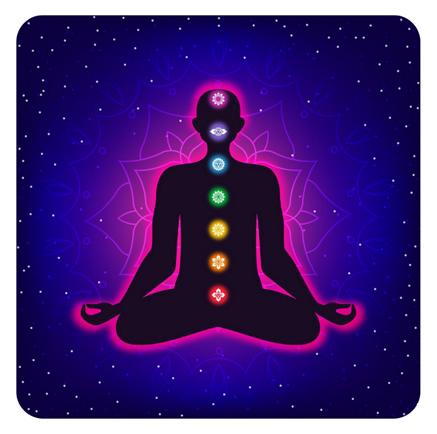
| 1. ROOT CHAKRA (Muladhara) |
The root chakra governs survival, stability, and grounding. It connects us to the Earth and gives us a sense of security.
|
| 2. SACRAL CHAKRA (Svadhisthana) |
The sacral chakra controls emotions, pleasure, sensuality, and creativity. It governs how we relate to others and enjoy life.
|
| 3. SOLAR PLEXUS CHAKRA (Manipura) |
The solar plexus chakra is the center of personal power, confidence, and self-discipline. It influences decision-making and motivation.
|
| 4. HEART CHAKRA (Anahata) |
The heart chakra represents love, compassion, and emotional balance. It allows us to connect deeply with others.
|
| 5. THROAT CHAKRA (Vishuddha) |
The throat chakra is responsible for communication, truth, and expression. It helps us speak our thoughts clearly and honestly.
|
| 6. THIRD EYE CHAKRA (Ajna) |
The third eye chakra governs intuition, insight, and inner wisdom. It enhances perception and spiritual awareness.
|
| 7. CROWN CHAKRA (Sahasrara) |
The crown chakra connects us to higher consciousness and spiritual awakening. It represents enlightenment and unity with the universe.
|
