

DIETARY FIBRE: BENEFITS, TYPES, RISKS, AND RECOMMENDATIONS
A bowl of oats at breakfast or a spoonful of lentils added to soup can be a simple first step towards eating more fibre. These everyday foods help make fibre part of your routine, without a complete diet overhaul. Here’s how fibre supports your health, how the two main types differ, and why it’s best to increase your intake gradually.

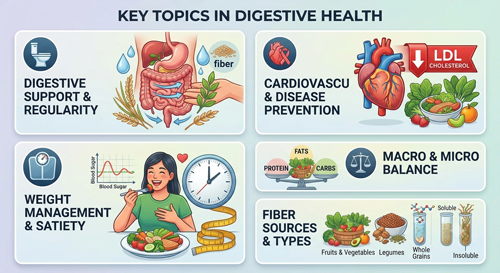
🚽 Digestive System Support & Constipation Prevention
Fibre resists digestion by human enzymes; some types are fermented by gut bacteria. A lack of fibre combined with inadequate fluid intake can cause constipation, characterised by slow-moving waste, hard stools, and straining. Combining fibre with proper hydration (water, fluids, tea) promotes smooth bowel movements.
⚖️ Weight Management & Satiety
Fibre creates a favourable gastrointestinal environment for maintaining a healthy weight. It helps control appetite, may help reduce overeating or unnecessary snacking between meals, stabilises blood sugar levels, and supports overall gut health.
❤️ Cardiovascular & Disease Prevention Benefits
- Lowering LDL (low-density lipoprotein) cholesterol, which is the bad cholesterol.
- Supporting a healthy cardiovascular system and overall heart health.
- May help reduce colorectal cancer risk.
🧬 Two Main Types of Fibre
- Soluble Fibre: Dissolves in water to form a gel-like substance in the digestive system. It slows digestion, aids satiety, and helps lower LDL cholesterol. Sources: Carrots, oats, apples.
- Insoluble Fibre: Adds bulk to the stool and promotes regular bowel movements. Sources: Nuts, cauliflower, lentils, brown rice, wheat bran.
- Note: A balanced diet should contain a mix of both fibre types.
📊 Daily Intake, Potential Discomfort, and Dietary Advice
- Recommended Daily Intake: Health Canada recommends 25 grams per day for women and 38 grams per day for men, though individual needs vary.
- Risks of Excessive Intake: Consuming too much fibre or increasing intake too rapidly can lead to unpleasant gastrointestinal symptoms and problems. Fibre intake should be built up gradually.
- Dietary Integration: Adding vegetables to meals or snacks (starting gradually with single meals like lunch or breakfast) is a practical approach. Fibre should be considered alongside macronutrients and micronutrients to maintain a balanced diet.

📝 SUMMARY 📝

- Choose a variety of fibre-rich plant foods to support digestion and heart health.
- Start small: try oats at breakfast or add lentils to soup or a salad.
- Increase fibre gradually and drink enough fluids to help avoid discomfort.
